
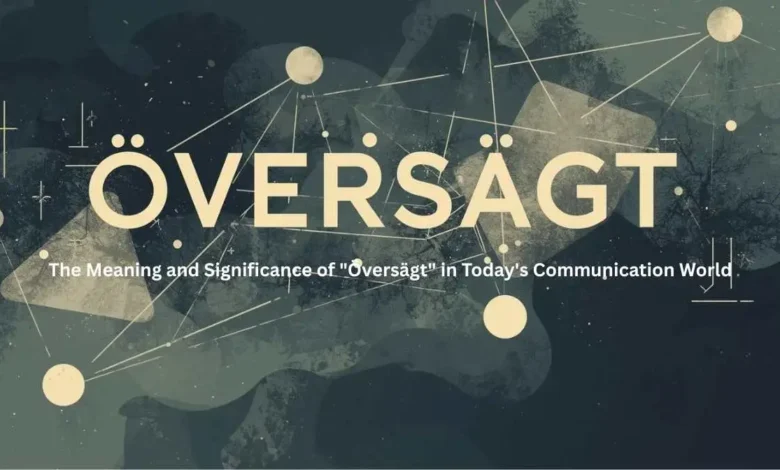
In today’s fast-paced digital world, communication plays a crucial role in connecting people across languages and cultures. One term that stands out is “översägt,” which seems to be a mix-up or typo of the more common Swedish word “översätt,” meaning “to translate.” In this article, we’ll dive into what “översägt” could mean, how language evolves in the digital age, and why translation remains a vital tool in global communication.
What is “Översägt”?
“Översägt” doesn’t appear to be a recognized word in the Swedish language. However, it’s possible that it’s a typo or a new form of slang, especially in digital communication. The word “översätta,” on the other hand, is commonly used in Swedish and means “to translate.” Translation is the process of converting text or speech from one language into another. It’s an essential tool that allows us to communicate across different cultures.
This confusion between “översägt” and “översätt” points to how language can change in the digital era. Sometimes, words are misspelled or shortened to create new meanings or slang.
Why Language Evolves
Language evolves over time, just like how we adapt our habits to new technologies or social trends. For example, words like “hashtag,” “emoji,” or “meme” have entered the global vocabulary due to the rise of social media. These words weren’t part of the language a few decades ago but have become crucial in digital communication.
The rise of digital communication tools like social media, texting, and instant messaging has also led to the creation of new terms. Sometimes, these terms are the result of typos, like “översägt,” or from shorthand used to convey ideas faster. Even though “översägt” may not be a standard word, it showcases how language adapts to technology.
The Role of Translation in Communication
Whether you are working with a global business or simply traveling abroad, translation helps bridge the gap between languages. Translation is a process where a text or speech is converted from one language to another while maintaining the original meaning. This process is vital in a world where people speak many different languages.
Without translation, the world would feel much smaller. Companies like Google, Facebook, and Twitter use advanced translation tools to connect users globally. These tools help individuals who speak different languages communicate easily. For example, if a French speaker wants to communicate with an English speaker, they can use Google Translate to understand each other, breaking down language barriers.
Misused or Confused Terms in Translation
In the digital age, translation tools and even human translators sometimes make mistakes. For instance, a simple error like typing “översägt” instead of “översätt” can lead to confusion. Misused or confusing terms can make communication harder, especially in professional and legal settings.
Consider this: if a legal contract is mistakenly translated using the wrong terms, it can create huge problems. This shows why accuracy in translation is so important. Even small mistakes, like misusing words such as “översägt,” can lead to misunderstandings and affect the quality of communication.
FOR MORE INTERESTED BLOGS LIKE THIS PLEASE VISIT “NEWSTODAY“.
How Machine Translation Tools Affect Language
Machine translation tools, like Google Translate, have made it easier to translate text between languages. These tools use complex algorithms and artificial intelligence (AI) to provide translations. However, they are not perfect. While they can translate simple phrases and sentences, they sometimes fail when it comes to context or idiomatic expressions.
For example, if you translate a phrase like “break a leg” (which means “good luck”) into another language, the machine might not understand the idiomatic meaning and could translate it literally. This is one reason why terms like “översägt” can appear in machine-generated translations. It’s important to remember that human translators are still needed for high-quality translations, especially when context and cultural understanding matter.
The Importance of Human Translators
Despite the advancements in AI and machine translation, human translators are still necessary for accurate and culturally appropriate translations. A professional translator brings a deeper understanding of the nuances of language. They ensure that the translation not only makes sense but also conveys the intended meaning.
For example, if you’re translating a book, a human translator would focus on maintaining the tone, style, and emotions of the original author. This is something a machine might miss. The importance of skilled translators cannot be overstated, especially in fields like medicine, law, and literature.
Misunderstandings Caused by Language Errors
Misunderstanding words or phrases due to language errors can cause significant problems. A simple mistake can lead to confusion, frustration, or even harm in serious situations. For example, consider medical translations: if a doctor’s instructions are poorly translated, it could lead to a patient misunderstanding how to take their medication. This could result in severe consequences for the patient.
Similarly, in business, unclear translations can damage a company’s reputation or lead to failed negotiations. To avoid these issues, it’s essential to rely on accurate translation methods and professionals who understand the language’s subtleties.
The Impact of Localization in Translation
Localization is another important aspect of translation. It goes beyond translating words; it’s about adapting content to fit the culture of the target audience. For instance, if a company is launching a product in Japan, they need to ensure that the marketing content is culturally appropriate for Japanese consumers.
Localization involves not just translating text but also adjusting images, colors, and even symbols to fit the local culture. What works in one country might not work in another. For example, colors have different meanings in various cultures, and a color that is considered lucky in one culture might be seen as unlucky in another.
How “Översägt” Could Shape Digital Communication
Even though “översägt” is not a standard term in Swedish, its existence highlights how language is shaped by technology. If “översägt” were to gain popularity, it could become a slang term used in informal settings. People might use it as a shorthand for “översätt,” especially in social media or text messages, where brevity is important.
In the future, terms like “översägt” could become part of the digital language landscape. Just as emojis and abbreviations like “lol” or “brb” are now widely recognized, “översägt” might follow a similar path. However, it would remain important to distinguish between informal language and professional communication, where accuracy is key.
The Future of Translation and Communication
As we move further into the digital age, translation will continue to play a crucial role in bridging cultures. Advances in AI and machine translation will make translations faster and more accurate. However, human translators will always be needed to ensure that the translations are culturally relevant and contextually accurate.
The future of translation also involves a more seamless integration of technology. Real-time translation, where people can speak in different languages and hear the translation immediately, is already being developed. This will break down even more barriers and create a more connected world.
Conclusion: The Role of Translation in a Globalized World
In conclusion, the term “översägt” might be a misspelling or new slang, but it shows how language evolves with technology. As we move toward a more interconnected world, translation will continue to be essential for effective communication. Whether through machine translation or human expertise, language has the power to connect us, break down barriers, and create understanding.
The next time you use translation tools or hear a new term like “översägt,” remember that language is always changing. It adapts to new technologies, cultures, and needs. And as we continue to innovate, translation will remain a key element in shaping global communication.