
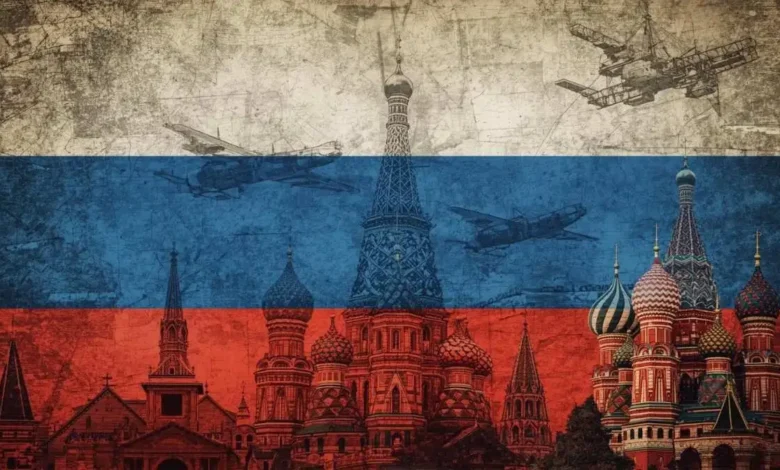
Russia, the largest country in the world by land area, has a history that stretches back more than a millennium, from the early Slavic tribes to its current status as a global superpower. Throughout its history, Russia has experienced monumental shifts in power, society, and culture, transitioning from fragmented tribal kingdoms to the world’s largest empire, to the Soviet Union, and into its modern form as the Russian Federation. The development of Russia has profoundly influenced not only Eastern Europe but also global history, politics, and economics.
This article provides a comprehensive overview of Russia’s history, beginning with its early days as part of the Slavic and Viking world, through its formation as the Kievan Rus, the rise and eventual collapse of the Tsarist Empire, the Soviet era, and the contemporary Russian state. We will explore key figures, events, and historical processes that have shaped Russia’s identity and its role in the world.
Early Roots: The Slavs and the Kievan Rus
The history of Russia begins long before it became a unified state. The lands that would later form Russia were originally inhabited by a variety of tribal groups, with the most prominent being the East Slavs.
The early Slavic people lived in what is now Ukraine, Belarus, and Russia, and were often influenced by their neighbors, including the Scythians, Finnic tribes, and the nomadic Turkic peoples.
The Rise of the Kievan Rus
The first unified state that is considered the precursor to modern Russia was the Kievan Rus, a federation of Slavic tribes, founded in the 9th century. The Kievan Rus was established by Norse Vikings, called Varangians, who traveled down the rivers of Eastern Europe and formed a kingdom centered around the city of Kiev (modern-day Kyiv in Ukraine).
This period marked the beginning of a complex interaction between the local Slavic peoples and the Viking settlers.
In 862 AD, Rurik, a Viking chieftain, was invited to rule over the Slavic tribes. His successors expanded the realm, with his descendant, Oleg of Novgorod, capturing the key city of Kiev in 882 AD and making it the capital of the emerging state.
The Kievan Rus came to control a vast region stretching from the Baltic Sea to the Black Sea, encompassing parts of modern Russia, Ukraine, and Belarus.
Christianization of Kievan Rus
One of the most significant events in the early history of Russia was the Christianization of the Kievan Rus in 988 AD. Grand Prince Vladimir of Kiev converted to Christianity, adopting Byzantine religious practices and making Orthodox Christianity the state religion.
This decision set the stage for Russia’s enduring ties with the Eastern Orthodox Church and profoundly influenced Russian culture, architecture, and politics for centuries.
Vladimir’s conversion was part of a broader effort to unite the disparate tribes of the Kievan Rus under a single religious and cultural framework.
The Christianization of the Kievan Rus established a close relationship between the Russian state and the church, which would play a central role in shaping the future of Russia.
Decline of the Kievan Rus
By the 12th century, the Kievan Rus began to experience internal strife, and its unity started to fracture. The rise of feudalism within the state, coupled with Mongol invasions, led to the decline of the Kievan Rus.
In 1240, the Mongols, led by Batu Khan, invaded and sacked Kiev, effectively ending the Kievan Rus as a political entity. This marked the beginning of a period of Mongol rule over much of Russia, which would last for several centuries.
The Mongol Yoke and the Rise of Muscovy
After the fall of the Kievan Rus, much of Russia came under Mongol control, a period known as the “Mongol Yoke.” The Mongols ruled the Russian lands for almost 250 years, exacting tribute from the local population and limiting the political power of the Russian princes.
Despite their dominance, the Mongols left the Russian people largely intact, and many elements of Russian culture survived this period.
The Rise of Moscow
The Mongol period, however, allowed the principality of Moscow to rise in prominence. Moscow, originally a small town on the banks of the Moskva River, began to assert itself as a powerful force in Russian politics.
The Grand Duchy of Moscow, or Muscovy, grew in strength through both military conquest and the ability to win favor with the Mongol overlords. By the late 14th century, Moscow had become the leading principality in Russia.
Ivan III and the End of Mongol Rule
The turning point in Russia’s history came under Ivan III, also known as Ivan the Great. Ivan III successfully expanded Moscow’s territory and consolidated the Russian lands under his rule. In 1480, Ivan III refused to pay tribute to the Mongols and successfully challenged their authority, effectively ending the Mongol Yoke. This victory marked the beginning of a new era in Russian history, as Ivan III laid the foundations for the emergence of the Russian Empire.
The Tsarist Russia: The Rise of Imperial Power
By the early 16th century, Muscovy had grown into a centralized monarchy, with Ivan IV (Ivan the Terrible) becoming the first crowned Tsar of Russia in 1547. The Tsarist period saw Russia evolve from a fragmented collection of feudal states into a centralized empire with significant territorial ambitions.
Ivan IV: The First Tsar
Ivan IV, known as Ivan the Terrible, was one of the most powerful and controversial rulers in Russian history. His reign, which began in 1547, saw significant military expansion, including the conquest of Kazan, Astrakhan, and Siberia, which added vast territories to the Russian Empire.
However, Ivan IV is also remembered for his ruthless and tyrannical rule. His Oprichnina (a secret police force) was responsible for widespread purges and executions, earning him a reputation as a violent and paranoid ruler.
Despite the brutality of his rule, Ivan IV’s reign is significant for the centralization of power in Russia and the expansion of the Russian state. His actions set the stage for the eventual emergence of a powerful Russian Empire.
The Time of Troubles and the Rise of the Romanovs
Following Ivan the Terrible’s death in 1584, Russia entered a period of instability known as the Time of Troubles. This era was marked by a series of weak rulers, foreign invasions, and social unrest. The chaos of this period led to the eventual rise of the Romanov family, who would rule Russia for over 300 years.
In 1613, Michael Romanov was elected as Tsar, marking the beginning of the Romanov dynasty. The Romanovs played a key role in stabilizing Russia and consolidating its power. Under Tsar Peter I (Peter the Great), Russia would undergo a period of significant transformation.
The Russian Empire: Peter the Great and Catherine the Great
The 18th century saw Russia emerge as a powerful empire under the leadership of Tsar Peter I and his successor, Catherine II (Catherine the Great). This period of imperial expansion and modernization laid the foundations for Russia’s role as a dominant European power.
Peter the Great: The Westernization of Russia
Peter the Great, who ruled from 1682 to 1725, is considered one of Russia’s greatest tsars. He sought to modernize Russia and transform it into a major European power. Peter the Great implemented sweeping reforms aimed at westernizing Russian society, including the introduction of Western-style education, military tactics, and government structures.
He also moved the capital from Moscow to the newly founded city of St. Petersburg, which became a symbol of Russia’s modernization.
Peter’s reign was marked by significant military victories, including the Great Northern War (1700–1721), which resulted in Russia gaining control of key territories along the Baltic Sea. His reign laid the foundation for the Russian Empire, and his reforms had a lasting impact on the Russian state.
Catherine the Great: Expansion and Enlightenment
Catherine the Great, who reigned from 1762 to 1796, continued Peter the Great’s work of expanding and modernizing Russia. Catherine was an enlightened ruler who embraced Western philosophy and culture, and she sought to improve Russian society by reforming education, law, and government.
She also expanded the Russian Empire, notably through wars with the Ottoman Empire and Poland, which increased Russia’s influence in Europe.
Catherine is remembered for her efforts to strengthen the Russian economy and support the arts and culture. Under her reign, Russia became one of the most powerful and influential countries in Europe, and St. Petersburg flourished as a cultural center.
The Russian Revolution: The Fall of the Tsarist Empire
The 19th century was marked by growing social unrest, economic hardship, and dissatisfaction with the autocratic rule of the tsars. The Russian Empire, though powerful, was beginning to show signs of weakness.
The 1905 Revolution and the Rise of the Bolsheviks
In 1905, a wave of unrest and protest swept across Russia, culminating in the 1905 Revolution. Workers, peasants, and intellectuals demanded political reforms, better working conditions, and an end to autocratic rule.
Although the revolution did not result in the overthrow of the tsar, it forced Tsar Nicholas II to make some concessions, including the creation of the Duma (a legislative body).
However, the discontent continued to grow, especially among workers and peasants, leading to the rise of revolutionary movements.
The Bolsheviks, led by Vladimir Lenin, gained increasing support and eventually seized power in the October Revolution of 1917, marking the end of the Russian Empire and the beginning of Soviet rule.
The Soviet Union: Rise, Fall, and Legacy
The Bolshevik Revolution led to the establishment of the Soviet Union in 1922. The Soviet period was one of radical social, political, and economic change, and it had a profound impact on Russia and the world.
Lenin and the Creation of the Soviet State
Vladimir Lenin, the leader of the Bolshevik Party, became the first leader of the Soviet Union. Under Lenin, the Bolsheviks implemented a series of sweeping reforms, including the nationalization of industry and the redistribution of land.
The Russian Civil War (1917–1923) between the Red Army (Bolsheviks) and the White Army (anti-Bolsheviks) resulted in Bolshevik victory and the consolidation of Soviet power.
Stalin’s Rule: Industrialization, Terror, and War
Joseph Stalin, who rose to power after Lenin’s death in 1924, led the Soviet Union through some of its most tumultuous years. Stalin’s policies of rapid industrialization and collectivization led to the deaths of millions of people, including those who died in the Great Famine of 1932–1933 and the millions purged during the Great Terror.
Despite the horrific human cost, Stalin’s policies transformed the Soviet Union into an industrial powerhouse and a global military superpower.
Stalin’s leadership was marked by extreme repression and censorship, but it also saw significant military victories, particularly during World War II, where the Soviet Union played a crucial role in defeating Nazi Germany.
The Cold War and Soviet Decline
After World War II, the Soviet Union emerged as one of the two superpowers in the world, locked in an ideological and military rivalry with the United States. The Cold War (1947–1991) dominated global politics, with the Soviet Union and the U.S. competing for influence through proxy wars, the arms race, and space exploration.
However, by the 1980s, the Soviet Union was facing significant economic, political, and social challenges. Mikhail Gorbachev’s reforms, including glasnost (openness) and perestroika (restructuring), attempted to address these issues, but they also led to the unraveling of the Soviet system. In 1991, the Soviet Union officially dissolved, and Russia emerged as an independent state.
Post-Soviet Russia: Transition to Democracy and the Rise of Putin
After the collapse of the Soviet Union, Russia underwent a period of political and economic upheaval. The 1990s were marked by significant economic struggles, as the country transitioned from a centrally planned economy to a market economy. Privatization led to the rise of oligarchs, and the country faced severe economic instability.
The Leadership of Boris Yeltsin
Boris Yeltsin, who served as the first president of Russia from 1991 to 1999, oversaw the transition to democracy and a market economy. However, his presidency was marked by political chaos, economic hardship, and the loss of Russia’s superpower status.
Vladimir Putin and the Modern Russian State
Vladimir Putin, who became president in 1999, has played a central role in shaping modern Russia. Under Putin, Russia has reasserted itself on the world stage, with a focus on strengthening the central government, maintaining control over key industries, and expanding Russia’s influence internationally.
However, Putin’s rule has also been characterized by political repression, censorship, and the suppression of opposition.
Russia today is a major global power, though it faces significant challenges, including economic sanctions, political corruption, and ongoing conflicts with neighboring countries.
Conclusion: Russia’s Legacy and Future
Russia’s history is marked by a series of remarkable transformations, from the rise of the Kievan Rus to its current position as a global power. Throughout its history, Russia has been a land of contrasts — powerful and yet vulnerable, progressive and yet deeply conservative.
The country’s political, cultural, and economic landscape continues to evolve, and understanding Russia’s complex past is crucial to understanding its present and future role in global affairs.
Russia’s journey from medieval tribes to an empire, from the Soviet Union to the Russian Federation, reveals a nation that has endured great trials but also demonstrated remarkable resilience and ambition.
The future of Russia will likely continue to be shaped by its rich historical legacy, its internal challenges, and its ongoing relationship with the rest of the world.
for more interested blogs please visit website: